

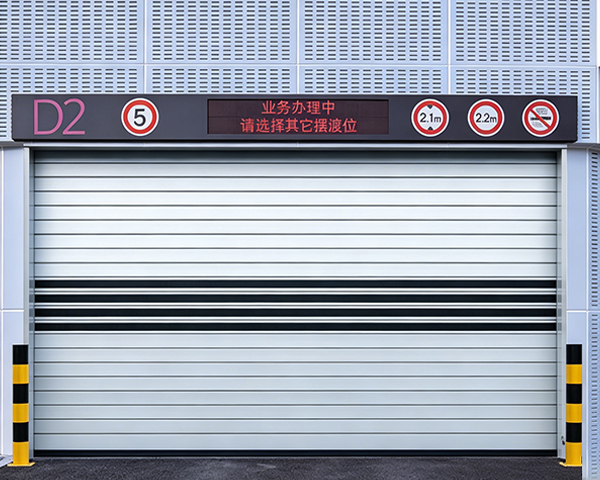
Thermal insulation industrial doors are an essential component in modern energy-saving buildings.
They are widely used in factories, warehouses, logistics centers, cold storage rooms, distribution hubs,
clean rooms, and commercial facilities where temperature control, operational efficiency, and energy performance
are important. In simple terms, a thermal insulation industrial door is designed to reduce heat transfer between
indoor and outdoor environments, helping building owners maintain stable internal temperatures while lowering
energy consumption.
As energy efficiency requirements continue to rise worldwide, the demand for insulated industrial doors is also
increasing. These doors are not only about closing an opening; they are part of a building’s thermal envelope.
A high-performance insulated industrial door can reduce heating and cooling losses, improve workplace comfort,
protect stored goods, support environmental control, and contribute to lower operating costs. For energy-saving
buildings, the right door system can make a measurable difference in long-term performance.
This article provides a comprehensive overview of the benefits of thermal insulation industrial door in energy saving buildings,
including key definitions, core advantages, common materials, typical specifications, application scenarios, and practical
selection factors. The content is designed to be SEO-friendly, clear, and useful for blogs, directory pages, industry pages,
product category pages, and other website content that needs original, high-quality information.
A thermal insulation industrial door is a specially engineered door system designed to minimize heat transfer.
It is typically used in industrial and commercial environments where temperature stability matters. Unlike standard doors,
thermal insulation industrial doors use insulated panels, tight sealing structures, durable tracks or opening systems,
and weather-resistant components to create an effective barrier against heat loss, cold air infiltration, dust, and moisture.
These doors may be installed in external building entrances, internal partition openings, loading areas, refrigeration zones,
production workshops, and temperature-controlled storage facilities. Their main purpose is to improve building energy efficiency
while maintaining safe, reliable, and convenient access for people, vehicles, and goods.
In energy-saving buildings, the door is more than an access point. It is a thermal control element that can influence:
Energy-saving buildings are designed to consume less energy while maintaining performance, comfort, and functionality.
In such buildings, every structural component must contribute to thermal efficiency. Industrial doors are often large openings,
which means they can become major weak points if they are not properly insulated. Heat loss through a poorly insulated door
can increase HVAC load, reduce indoor comfort, and raise energy bills.
Thermal insulation industrial doors help solve this problem by creating a strong thermal barrier. They reduce unwanted
heat exchange between different environments, helping buildings retain warm air in winter and cool air in summer. This is
especially important in facilities with frequent traffic, large entrances, or strict environmental requirements.
In many industrial and commercial buildings, energy savings are not achieved by one single feature. Instead, performance comes
from combining insulation in walls, roofs, windows, floors, and doors. When a thermal insulation industrial door is properly
specified and installed, it becomes a valuable part of the building’s overall efficiency strategy.
One of the most important benefits of thermal insulation industrial door systems is their ability to reduce heat loss.
The insulated core, sealed edges, and engineered structure help slow down heat transfer through the door panel. This
means less warm air escapes during cold weather and less hot air enters during warm weather.
For buildings that depend on controlled temperatures, even small reductions in heat loss can have a major effect on
energy consumption. Over time, this can lead to noticeable savings in heating and cooling costs.
Heating, ventilation, and air conditioning systems often work harder when doors allow excessive heat exchange.
A thermal insulation industrial door helps stabilize indoor conditions, allowing HVAC systems to operate more efficiently.
When the building envelope is better sealed, air-conditioning units, heaters, and climate-control equipment do not need
to cycle as frequently or run at maximum load for long periods.
This can extend equipment life, reduce maintenance stress, and improve overall system performance. In energy-saving buildings,
HVAC optimization is one of the most important reasons to choose insulated industrial doors.
Temperature fluctuations can cause product damage, production issues, worker discomfort, and equipment inefficiency.
Thermal insulation industrial doors help maintain stable temperatures by limiting external temperature influence.
This is especially valuable in facilities such as food storage warehouses, pharmaceutical spaces, cold chain logistics
centers, manufacturing plants, and climate-sensitive production areas. Stable indoor conditions support better quality control
and more reliable operations.
In industrial buildings, comfort is often overlooked, but it directly affects productivity, safety, and employee satisfaction.
Drafts, cold spots, and excessive heat near door openings can create uncomfortable working conditions. Insulated industrial doors
help reduce these issues by limiting temperature swings and air leakage.
A more comfortable indoor environment can support better concentration, fewer complaints, and a healthier workplace atmosphere.
This is particularly important in loading bays, entrances, and large workshops where doors are opened regularly.
Condensation can occur when warm, humid air meets a cold surface. In industrial and refrigerated environments, this can create
moisture problems, slippery floors, corrosion, mold growth, and hygiene concerns. A thermal insulation industrial door helps
reduce surface temperature differences and therefore lowers the risk of condensation.
This benefit is important for food processing plants, cold rooms, clean facilities, and storage areas where moisture control
is necessary for both safety and product quality.
Energy-saving buildings are increasingly aligned with green building standards, sustainability certifications, and carbon
reduction targets. An insulated industrial door contributes to these goals by improving energy efficiency and reducing
operational waste.
Because industrial doors are often large openings, a high-performance insulated door can significantly improve the energy
profile of the building. This helps support broader sustainability strategies, including lower greenhouse gas emissions and
reduced dependence on energy-intensive climate control systems.
Energy efficiency is directly linked to cost efficiency. By reducing heat loss, improving air sealing, and lowering HVAC demand,
thermal insulation industrial doors can help building owners save money over the long term. Although the initial investment may
be higher than that of basic door systems, the total lifecycle value is often better because of lower energy bills and reduced
maintenance needs.
In many industries, energy savings are not optional; they are part of a competitive business strategy. A well-insulated industrial
door can therefore offer strong return-on-investment potential.
Many industrial environments need more than simple access. They require strict control over temperature, airflow, humidity,
and cleanliness. Thermal insulation industrial doors help create controlled zones within a building and reduce unwanted
environmental exchange.
This is essential for industries that handle temperature-sensitive products, precision manufacturing, electronic components,
laboratory materials, or hygienic storage needs.
Temperature variations can damage inventory, reduce shelf life, or compromise product quality. An insulated industrial door
supports a more stable internal environment, which helps protect goods from heat, cold, and humidity changes.
This is particularly important in warehousing, cold chain logistics, agriculture storage, beverage distribution, and
pharmaceutical storage. Better thermal control can reduce spoilage, waste, and quality loss.
Although thermal insulation is the main purpose, many insulated industrial doors also offer acoustic benefits.
The door panel structure and sealing system can help reduce sound transmission between indoor and outdoor areas.
Noise reduction is valuable in urban industrial areas, logistics facilities, and buildings that operate near office spaces
or residential zones. A quieter environment can improve safety, communication, and workplace comfort.
Industrial buildings face exposure to weather conditions, dust, and outdoor contaminants. Thermal insulation industrial doors
often include robust sealing systems that help block drafts, rain, dust, and wind. This improves both energy performance and
indoor cleanliness.
A better-sealed door can also help protect equipment and products from environmental contamination, especially in sensitive
production or storage spaces.
In large facilities, different zones often require different temperature or environmental conditions. Thermal insulation
industrial doors can be used to separate spaces efficiently, allowing one area to remain cooled, heated, or climate-controlled
without unnecessary energy waste in adjacent zones.
This zoned approach is commonly used in warehouses, manufacturing plants, and multi-purpose industrial buildings.
Thermal insulation industrial doors are used across a wide range of industries and building types. Their role may differ
depending on the specific environment, but the core objective remains the same: energy saving and thermal control.
The performance of a thermal insulation industrial door depends heavily on its materials and construction.
Different materials provide different levels of insulation, durability, fire performance, weight, and weather resistance.
| Material / Component | Main Function | Common Benefits |
|---|---|---|
| Polyurethane foam core | Provides thermal insulation | High insulation value, lightweight structure, energy efficiency |
| Steel panel skin | Offers strength and protection | Durability, impact resistance, long service life |
| Aluminum frame or profile | Supports door structure | Corrosion resistance, clean appearance, stable performance |
| Rubber sealing strips | Prevents air leakage | Improved airtightness, draft reduction, weather protection |
| Insulated sectional panels | Form the main door leaf | Balanced thermal performance and structural strength |
| Galvanized hardware | Supports moving parts | Wear resistance, reliability, long-term operation |
| Thermal break components | Reduce heat bridging | Better insulation performance, lower heat transfer |
There are several types of industrial doors suitable for energy-saving buildings. The best choice depends on the opening size,
frequency of use, required insulation level, and operating environment.
| Door Type | Description | Typical Use | Energy Efficiency Value |
|---|---|---|---|
| Sectional insulated door | Door made of insulated panels that move vertically | Warehouses, factories, loading areas | High thermal performance and strong sealing |
| High-speed insulated door | Fast-opening system designed to reduce air exchange | Cold storage, logistics, clean zones | Excellent for reducing temperature loss during frequent access |
| Roll-up insulated door | Compact door that rolls into a coil or box | Commercial and industrial entrances | Moderate to high, depending on panel and sealing design |
| Sliding insulated door | Door that moves horizontally along a track | Large openings, specialized industrial areas | Good for large openings and stable thermal separation |
| Rapid folding insulated door | Door designed for fast opening and closing in busy areas | High-traffic industrial zones | Useful when access speed and energy control are both needed |
When choosing a thermal insulation industrial door for an energy-saving building, it is important to evaluate performance
data rather than appearance alone. The right specifications help ensure long-term energy efficiency and operational reliability.
| Specification | What It Means | Why It Matters |
|---|---|---|
| Thermal transmittance (U-value) | Measures heat transfer through the door | Lower U-value usually means better insulation performance |
| Air tightness | Measures how much air leaks through gaps | Improves temperature control and reduces energy loss |
| Panel thickness | Thickness of the insulated door panel | Thicker panels often provide stronger thermal performance |
| Opening speed | How fast the door opens and closes | Faster cycles can reduce energy loss in busy environments |
| Cycle life | Expected number of opening and closing cycles | Important for facilities with frequent door use |
| Wind resistance | Ability to resist outdoor wind pressure | Critical for external industrial entrances |
| Moisture resistance | Ability to handle humidity and water exposure | Important for cold rooms, wash-down areas, and outdoor use |
| Impact resistance | Ability to withstand bumps and collisions | Useful in logistics and forklift traffic zones |
| Sealing system quality | Efficiency of seals around the frame and edges | Directly affects insulation and energy savings |
A building becomes more energy efficient when heat gain and heat loss are controlled. Large door openings can create major
energy leaks if they are not designed properly. Thermal insulation industrial doors improve building performance in several ways:
In practical terms, a good insulated door can help a building keep conditioned air inside and outdoor air outside.
This improves the building envelope and allows the rest of the energy-saving system to work more effectively.
Warehouses and logistics centers need large doors for frequent vehicle and cargo movement. Thermal insulation industrial doors
help prevent energy loss during opening cycles and support better climate control in storage zones. This is useful for both
general warehousing and temperature-sensitive distribution.
Cold storage facilities rely heavily on insulation. Every unnecessary air exchange can increase refrigeration costs and
reduce product safety. Insulated industrial doors help maintain low temperatures, reduce frost issues, and limit compressor load.
Food plants benefit from clean, stable, and controlled environments. A thermal insulation industrial door helps manage
temperature, support hygiene, and reduce condensation, which is important for food safety and quality control.
Manufacturing plants often contain different thermal zones, machinery, and worker areas. Insulated doors support energy
management by controlling airflow between production spaces and external loading areas.
In highly controlled facilities, maintaining environmental stability is essential. Thermal insulation industrial doors help
preserve the required conditions and reduce the risk of contamination or climate-related variation.
If this content is being used on a website for ranking purposes, the following keyword themes are naturally relevant and
can be included across headings, meta descriptions, internal links, and related page content:
For SEO purposes, it is also useful to keep the content structured with clear headings, descriptive paragraphs, supporting
tables, and related internal links. Search engines tend to favor pages that answer user intent clearly and provide practical,
well-organized information.
Not every insulated industrial door performs the same. Several factors influence actual thermal efficiency in real-world use.
To maximize energy savings, a thermal insulation industrial door should be used as part of a complete building strategy.
The following best practices can help improve results:
Proper operation and maintenance are just as important as material quality. Even a high-performance insulated door can lose
efficiency if it is damaged, poorly adjusted, or left open for too long.
The following table provides a general example of common industrial door specification ranges. These values are for reference
only and may vary depending on design, application, and project requirements.
| Item | Typical Range / Example |
|---|---|
| Door type | Sectional, roll-up, high-speed, sliding, folding |
| Panel material | Steel skin with insulated foam core |
| Insulation core | Polyurethane or similar thermal insulation material |
| Panel thickness | Commonly 40 mm to 100 mm or more |
| Surface finish | Powder-coated, galvanized, or coated metal surface |
| Operation mode | Manual, electric, automatic, or high-speed control |
| Sealing system | Side seals, bottom seals, top seals, frame seals |
| Application environment | Warehouse, cold room, logistics, factory, controlled space |
| Main benefit | Energy saving, temperature control, reduced air leakage |
The benefits of thermal insulation industrial door in energy saving buildings are clear and practical. These doors help reduce
heat loss, lower HVAC energy consumption, improve indoor comfort, minimize condensation, and support sustainable building goals.
They are an important part of any industrial or commercial facility that values thermal efficiency and long-term operational savings.
Whether used in warehouses, cold storage areas, manufacturing plants, logistics centers, or controlled environments, a properly
designed insulated industrial door can contribute significantly to building performance. For businesses and project developers
focused on energy efficiency, the thermal insulation industrial door is not just a door system—it is a strategic part of the
building envelope.
By selecting the right materials, performance specifications, and installation methods, building owners can achieve stronger
energy-saving results and better environmental control. In modern energy-saving buildings, insulated industrial doors remain
one of the most effective and practical solutions for reducing energy waste and improving overall efficiency.
```
شنيانغ مانلونج للمنتجات المعدنية المحدودة


حقوق الطبع والنشر © 2026 شركة Shenyang Manlong Metal Products Co., Ltd. جميع الحقوق محفوظة التطبيقات
يستخدم هذا الموقع ملفات تعريف الارتباط لضمان حصولك على أفضل تجربة على موقعنا.

 English
 Español
 Portugues
 Pусский
 Français
 Deutsch
 ไทย
ไทย Türk dili
 Tiếng Việt



 هاتف
هاتف
تعليق
(0)